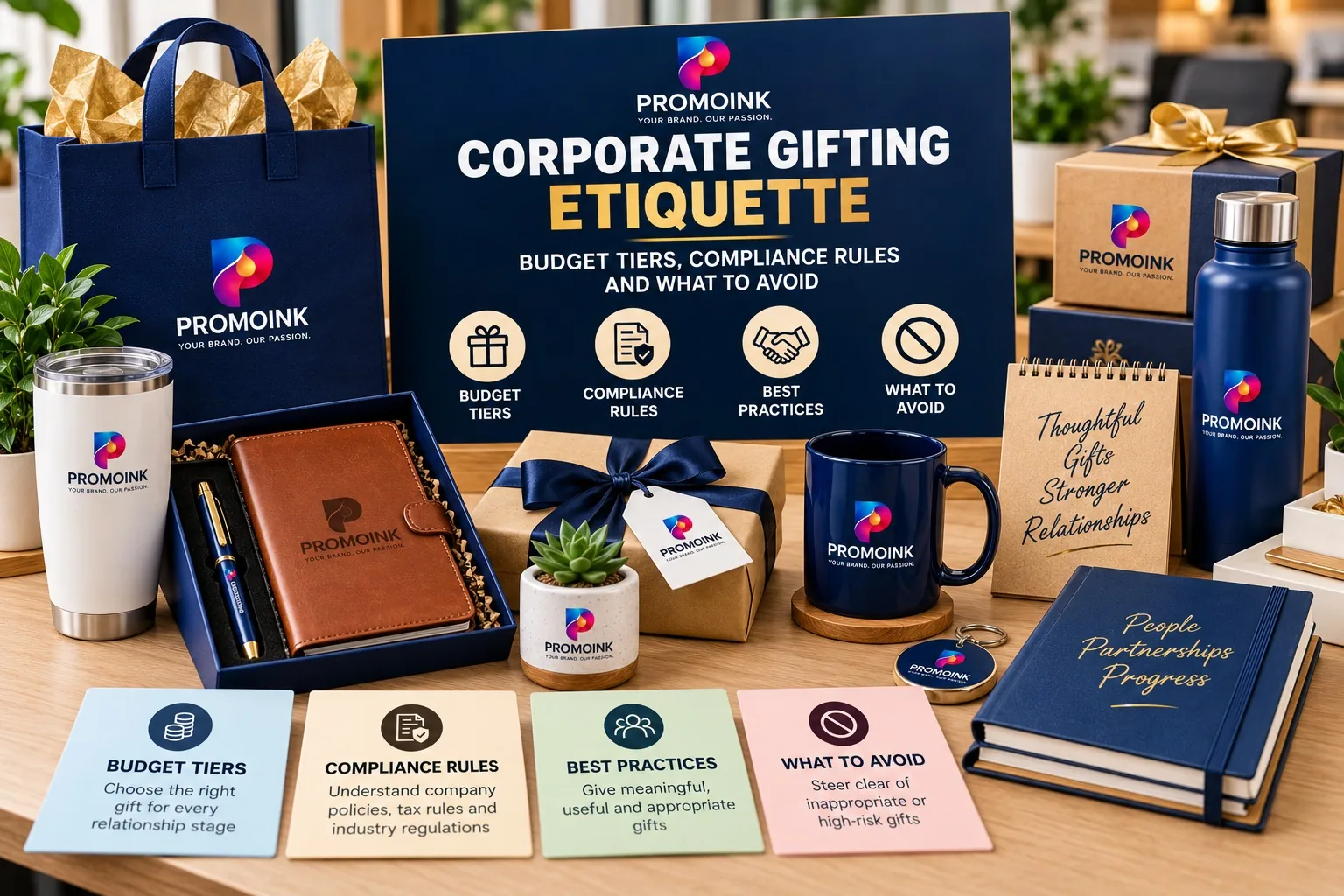
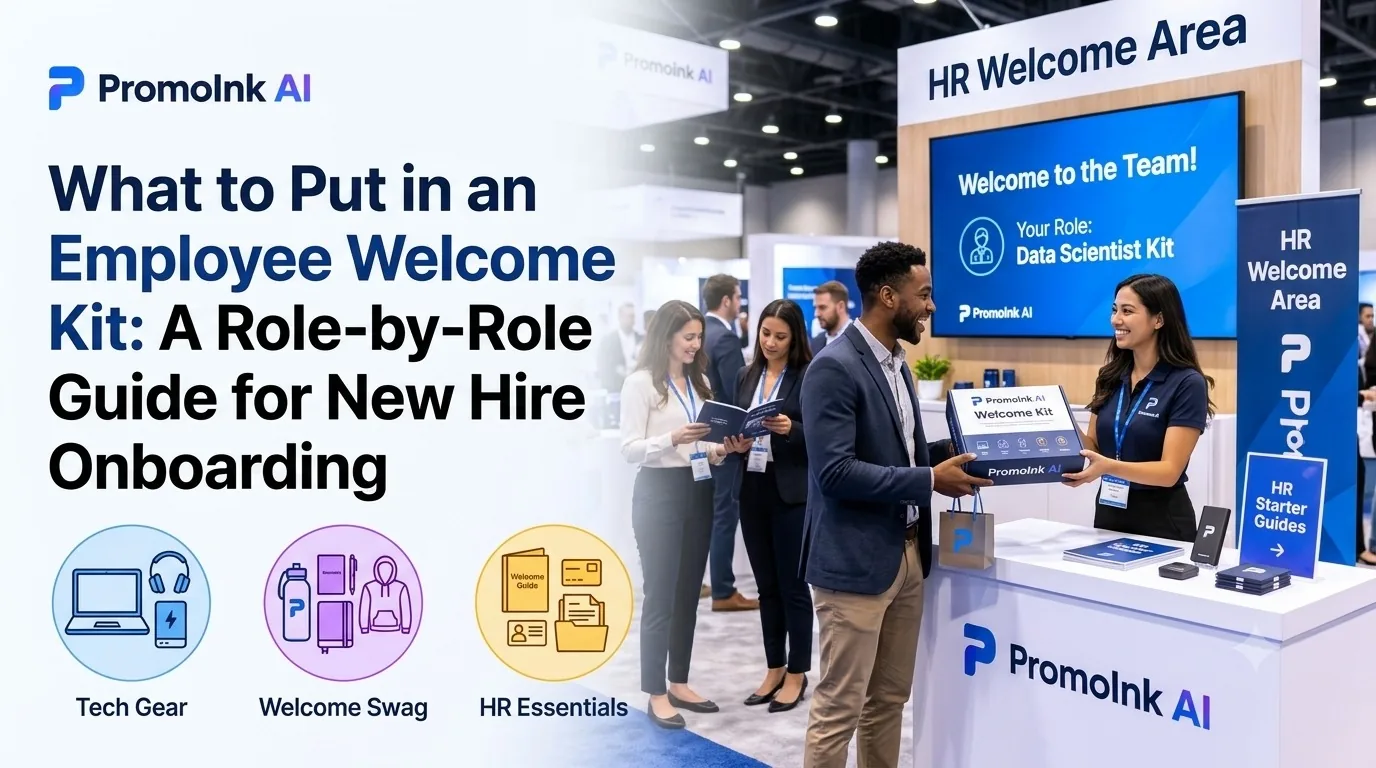
An effective employee welcome kit should give a new hire useful tools, a sense of belonging, and practical information for their first days at work. What to put in an employee welcome kit depends on the employee's role, workplace setup, daily responsibilities, and company culture. A useful kit may include branded apparel, notebooks, drinkware, technology accessories, role-specific tools, onboarding documents, and a personal welcome note.
PromoInk AI offers a custom New Employee Welcome Kit, quoted to your needs, plus branded apparel, drinkware, bags, tech accessories and gift sets.
Start With the Employee, Not the Merchandise
A welcome kit works best when the contents have a clear purpose. Giving every employee the same five or six promotional items may seem simple, but a new designer, warehouse employee, sales representative, and remote software developer can have very different day-to-day needs.
Start by identifying three factors:
Role
What does the employee use during a typical workday?
Work location
Do they work remotely, in an office, at client sites, or across multiple locations?
First-week needs
What would make their first few days easier or help them feel connected to the organization?
This framework helps HR teams build useful onboarding kits instead of assembling products simply because they carry a logo.
A Core Kit Everyone Can Receive
Explore the custom onboarding kit as a starting point, then tailor the contents to the employee's role and work setup.
A shared foundation keeps the onboarding experience consistent while leaving room for role-specific additions. A basic employee kit could include:
- Branded notebook or journal
- Quality pen
- Reusable water bottle or tumbler
- Welcome card signed by the manager or team
- Employee handbook or quick-start information
- Company-branded apparel
- Laptop sleeve or technology pouch
- Small desk accessory
- Information about internal communication channels and resources
The core collection should remain practical and easy to use. A new hire is more likely to appreciate a notebook they use during meetings than an item that sits in a drawer.
The welcome message also matters. A short note explaining the significance of the items can make the package feel intentional rather than promotional. Consider practical drinkware and bags for everyday use.
What to Include for Office-Based Employees
Employees working primarily from an office often benefit from items that support their desk, commute, and interaction with colleagues.
A suitable office kit may include:
- Branded notebook and pen
- Coffee mug or insulated tumbler
- Company polo, T-shirt, or jacket
- Laptop sleeve
- Desk organizer
- Reusable water bottle
- ID badge holder
- Lunch bag or tote
- Small welcome card
For employees who spend considerable time moving between meeting rooms, departments, or office locations, a compact tote can be especially useful.
Avoid filling an office kit with duplicate desk products. One useful notebook, one reliable writing instrument, and one drinkware item can be more effective than several inexpensive alternatives.
Building a Remote Employee Welcome Kit
Remote employees have different onboarding needs because their first interaction with the organization may happen through a video call rather than an office reception desk.
A remote employee welcome kit can combine practical home-office items with products that reinforce team identity.
Useful options include:
- Laptop sleeve
- Desk mat
- Notebook
- Branded mug or insulated tumbler
- Webcam cover
- Cable organizer
- Headphone case
- Company T-shirt or hoodie
- Reusable water bottle
- Personal welcome card
Remote employees may also appreciate a small item that creates a connection with the wider team, such as a company-branded apparel piece that can be worn during virtual meetings.
Digital resources can accompany the physical package. A QR code can link to the onboarding portal, team directory, benefits information, IT instructions, or a short welcome video. This keeps important information accessible without overcrowding the physical kit.
Role-Specific Kit Ideas
Role-based additions are useful when employees require different equipment, materials, or presentation items.
For sales teams, useful kit additions include a polo shirt, notebook, tumbler, and presentation folder to support client meetings and travel. Marketing teams can benefit from notebooks, apparel, totes, and creative accessories for meetings, events, and campaigns. Designers may find sketchbooks, desk mats, and creative stationery useful for planning and creative work.
For technology teams, laptop sleeves, cable organizers, and tech pouches help keep devices organized. HR and People Ops teams can use notebooks, badge holders, totes, and apparel for office activities and employee interactions. Field teams may benefit from durable bottles, caps, jackets, and totes for travel and outdoor work.
For executives, premium notebooks, pens, tumblers, and portfolios suit meetings and professional settings. Customer support teams can use headset accessories, notebooks, and drinkware to support their daily desk-based work.
Some employees may need several role-specific items, while others may need only one addition to the standard kit.
First Day Swag Essentials Should Have a Job
First-day swag can easily turn into a pile of branded products with little connection to the employee's actual experience.
A better test is simple: What will this person use during the first week?
For example, a notebook can support training sessions and meetings. A tumbler can be used throughout the workday. A laptop sleeve can protect equipment during commuting. A branded shirt can help create a shared identity during team events.
Items should also be easy to store and transport. New hires may already have a laptop, paperwork, personal belongings, and other equipment on their first day. A bulky collection of merchandise can become inconvenient.
Choosing Apparel by Role and Workplace
Compare branded apparel for office, client-facing, and field teams.
Apparel is one of the most visible elements of an onboarding kit, but the right garment depends on the employee's work environment.
For office teams, polos, T-shirts, lightweight jackets, or sweaters can work well. Sales and client-facing employees may benefit from apparel with a more polished appearance. Field employees may need durable outerwear or caps that suit their working conditions.
Pay attention to:
- Fabric weight and comfort
- Available sizes
- Decoration method
- Brand placement
- Color options
- Care instructions
- Seasonal requirements
Size collection should be handled carefully and privately. HR teams can use an onboarding form to gather apparel sizes before production, reducing exchanges and helping employees receive something they can actually wear.
A Different Formula for Remote and Onsite Kits
Remote and office-based kits do not need to be completely different. A shared core can maintain consistency while the remaining items reflect each work environment.
Both onsite and remote employees can receive a notebook and a mug or tumbler as part of their welcome kit. For onsite employees, useful additions include T-shirts, polos, or jackets, desk organizers, laptop sleeves, and a welcome card. A tote or lunch bag can also support daily commuting.
For remote employees, consider T-shirts, hoodies, or jackets, along with desk mats, cable organizers, laptop sleeves, and tech pouches. A welcome card paired with digital resources can help them feel connected to the team. Commuting items such as totes or lunch bags are generally less relevant for remote employees.
This model gives HR teams a consistent brand experience without treating every employee's workday as identical.
Build the Kit Around the First 30 Days
A welcome package does not need to solve every onboarding requirement on day one. Consider the employee's first month instead.
A practical sequence can look like this:
Before day one
Send access information and ship the welcome kit so remote hires receive it before their start date.
Day one
Share the personal welcome message and core onboarding resources.
Week one
Introduce role-specific tools, team resources, and relevant training.
First month
Provide any additional materials required for the employee's responsibilities.
This approach reduces unnecessary products and gives HR teams a clearer reason for every item included.
It can also make procurement easier. Instead of ordering a large collection of products without a defined purpose, teams can group merchandise according to employee type and onboarding stage.
PromoInk AI offers a custom New Employee Welcome Kit, quoted to your needs, plus branded apparel, drinkware, bags, tech accessories and gift sets.
Common Welcome Kit Mistakes to Avoid
Even well-funded onboarding programs can miss the mark. Several problems appear repeatedly.
Too many generic items: A large number of low-use products can make the kit feel promotional rather than welcoming.
No role distinction: A field employee and remote knowledge worker may have very different practical needs.
Poor product quality: Items that break, fade, or feel uncomfortable can reflect poorly on the employee experience.
Missing size information: Apparel orders should account for accurate sizing before production.
Too much packaging: Excessive packaging creates waste and makes kits harder to transport.
No personal element: A short note from a manager or team can add more warmth than another branded product.
Outdated information: Printed onboarding materials should be reviewed regularly so employees do not receive obsolete instructions.
How HR Teams Can Plan the Right Kit
Before placing an order, create a simple kit brief containing:
- Employee role or department
- Work location
- Number of new hires
- Required apparel sizes
- Preferred product categories
- Brand guidelines
- Decoration requirements
- Target budget
- Delivery date
- Packaging requirements
- Any sustainability requirements
Frequently Asked Questions
What should be included in an employee welcome kit?
A practical employee welcome kit can include branded apparel, a notebook, pen, reusable drinkware, a laptop sleeve, a welcome card, onboarding information, and role-specific items. The final selection should reflect the employee's responsibilities and work environment.
How much should an employee welcome kit cost?
There is no universal budget. HR teams can set spending levels based on company size, role, onboarding frequency, merchandise quality, shipping, packaging, and the number of items required. A smaller selection of useful products can provide more value than a large collection of inexpensive items.
What should go in a remote employee welcome kit?
A remote kit can include a laptop sleeve, desk mat, cable organizer, notebook, drinkware, branded apparel, and a personal welcome message. Digital onboarding resources can complement the physical package.
Should every new employee receive the same welcome kit?
A shared core can create consistency, but role-based additions often make the kit more useful. Teams can keep several common products while adjusting items for remote, office, client-facing, creative, technical, or field-based roles.
Are branded products necessary in an onboarding kit?
Not every item needs a logo. Branded merchandise works best when it serves a practical purpose or reinforces company identity, so balance useful products with thoughtful onboarding information.
Build a Welcome Kit That Fits the Person
An employee welcome kit should feel like part of the onboarding experience, not a box of leftover promotional merchandise. The strongest programs begin with the employee's role, work setting, first-month needs, and company culture, then select products that support those factors.
A shared core keeps the experience consistent, while role-specific and remote-friendly additions make the package more relevant. HR teams can also improve the experience by reviewing sizes, branding, packaging, delivery timing, and product quality before production.
PromoInk AI offers a custom New Employee Welcome Kit, quoted to your needs, plus branded apparel, drinkware, bags, tech accessories and gift sets.
Contact us and share the number of new hires, work setup, budget, apparel sizes and delivery date, and a product specialist can recommend options that fit your onboarding plan.