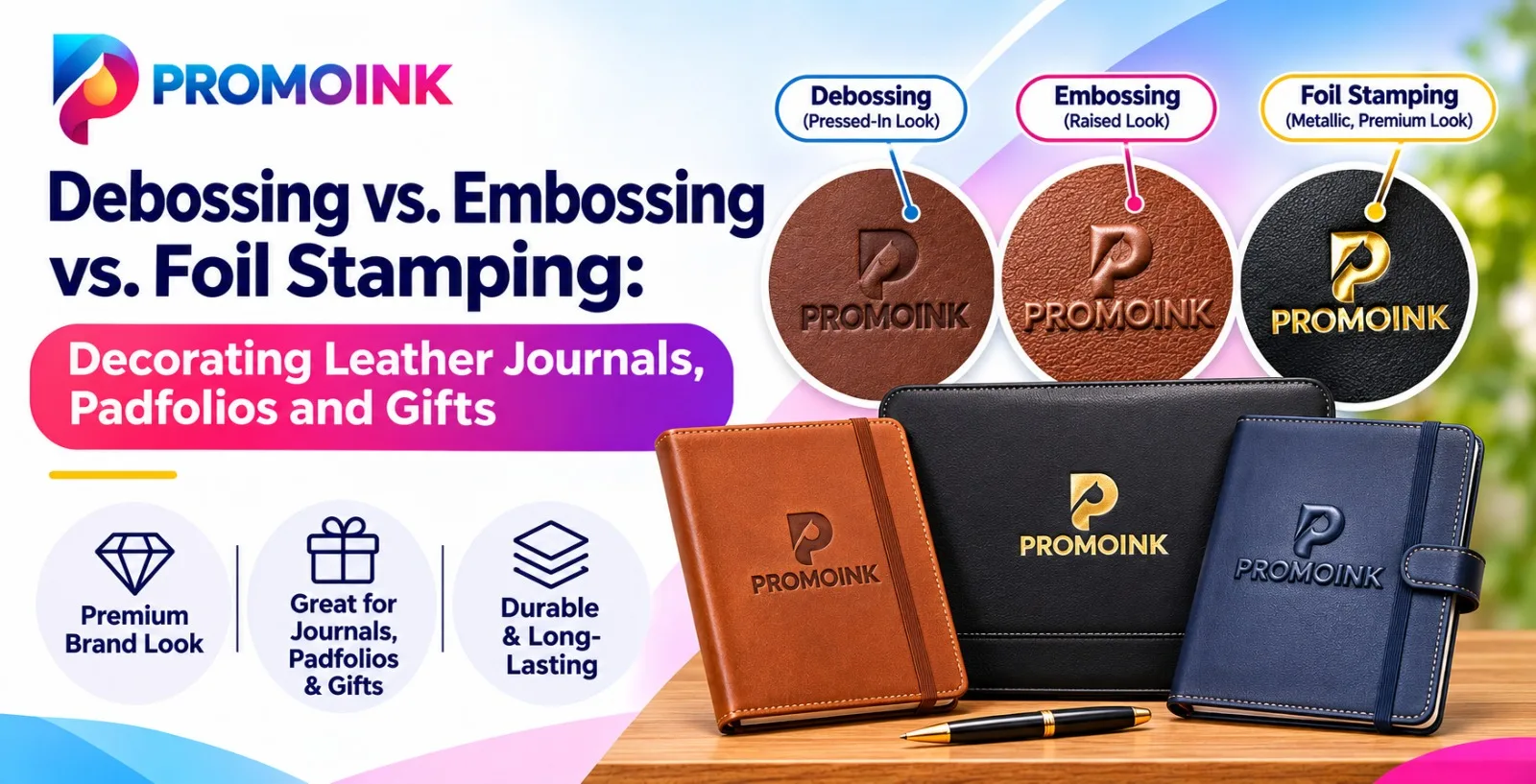
Debossing, embossing, and foil stamping are three popular techniques for adding logos and decorative details to leather journals, padfolios, and corporate gifts. The main difference is how each finish appears: debossing presses a design into the material, embossing raises it above the surface, and foil stamping applies a metallic or colored finish using heat and pressure. Knowing the difference helps corporate gift buyers select a decoration method that complements their brand identity, product material, budget, and desired presentation.
For executive stationery, decoration involves more than placing a company logo on a cover. The finish influences how a product looks, feels, and represents an organization. A recessed logo creates an understated appearance, a raised design adds texture, and foil stamping introduces a decorative accent that attracts attention. Each method has different production requirements, making material compatibility and artwork preparation important considerations before placing an order.
Understanding the Three Leather Decoration Techniques
Although all three techniques can display a company logo, they create different visual and tactile effects. The choice affects the character of the finished product, especially on executive stationery that recipients may use regularly.
1. Debossing: A Subtle Recessed Logo
Debossing presses a logo, name, or decorative design into the surface of leather or a suitable leather-like material. A custom metal die applies heat and pressure to create a recessed impression. The design sits below the surrounding surface, producing a clean finish that does not require added ink or color.
This technique works particularly well for corporate journals, executive portfolios, padfolios, and personalized gifts. It gives the cover a refined appearance without making the branding visually dominant.
Why corporate buyers choose debossing:
- Understated branding: The recessed design keeps the company logo visible without overwhelming the cover.
- Tactile detail: The impression creates a subtle texture that recipients can feel.
- Clean appearance: Blind debossing uses the material's natural color rather than an additional decorative color.
- Long-lasting presentation: The impression is integrated into the surface, rather than applied as a separate printed layer.
Debossing is particularly suitable for businesses that prefer minimal branding on executive gifts. It can also accommodate initials, short names, monograms, and simple logo designs.
2. Embossing: A Raised and Textured Design
Embossing creates a raised design by pressing the material from behind or using a suitable die arrangement. Instead of sinking into the cover, the logo or artwork projects above its surrounding surface.
The result is a noticeable three-dimensional effect. It can make a company name, monogram, or decorative pattern more prominent while retaining the texture and appearance of the material.
Embossing is often selected for:
- Executive journals with distinctive cover branding.
- Premium padfolios for conferences and business meetings.
- Personalized leather accessories featuring initials.
- Recognition gifts with prominent names or decorative details.
The final appearance depends on the material's thickness, flexibility, surface texture, and construction. Very fine artwork may lose definition, particularly on textured or heavily grained surfaces.
For this reason, simple logos, readable lettering, and designs with adequate spacing generally produce more consistent results than highly detailed artwork.
3. Foil Stamping: Metallic and Colored Branding
Foil stamping applies a thin decorative foil to a material using a heated die and controlled pressure. The foil transfers onto the surface in the shape of the selected design, creating a reflective or colored finish.
Gold and silver are common choices for executive stationery, although other metallic shades and specialty colors may be available depending on the product and material.
Foil stamping on leather is suitable for buyers who want their branding to stand out through color and contrast. For example, gold lettering on a dark brown journal creates a formal appearance, while silver foil on black material offers a cooler, understated finish.
Common reasons to choose foil stamping include:
- Adding metallic accents to company logos.
- Highlighting names, initials, or titles.
- Creating a more decorative appearance on presentation gifts.
- Coordinating stationery with a company's brand colors.
- Making lettering easier to notice against a contrasting cover.
Unlike blind debossing, foil stamping introduces a separate decorative layer. Its appearance and durability depend on the foil formulation, material surface, application conditions, and handling.
Debossing vs Embossing: Key Differences at a Glance
Both methods use pressure to create a physical impression, but the direction of the impression changes the finished appearance. Foil stamping differs because it transfers a decorative layer onto the surface.
The main distinction in debossing vs. embossing is the direction of the impression. Debossing creates depth, while embossing creates height. Foil stamping adds decorative color and shine.
How Debossed Journals Are Made
Understanding how debossed journals are made helps buyers assess production quality and communicate their artwork requirements clearly.
The process generally involves the following stages:
1. Artwork preparation: The company logo, initials, or design is prepared in a suitable production format. Artwork is checked for readability, spacing, line thickness, and overall dimensions.
2. Die creation: A custom die is prepared using the approved artwork. Its design and specifications depend on the selected material, imprint requirements, and production equipment. The die contains the design that will be transferred into the material.
3. Material preparation: The journal cover is positioned and checked for suitable thickness, surface condition, and alignment. The material must be compatible with the selected stamping process.
4. Heat and pressure application: The die is pressed against the cover using controlled heat and pressure. This creates the recessed impression in the surface.
5. Inspection: The finished design is checked for alignment, depth, definition, and consistency. Large orders should receive appropriate production checks to maintain uniformity.
The exact process varies with the cover material, equipment, and manufacturer. Some synthetic leather materials require different settings from genuine leather, so production specifications should be confirmed before ordering.
Choosing the Right Decoration for Leather Journals and Padfolios
The best decoration method depends on the intended recipient, product style, branding requirements, and material.
Match the Finish to the Gift's Purpose
Different corporate gifting situations call for different visual styles.
- Client appreciation gifts: Blind debossing can create a restrained, professional appearance suitable for everyday journals.
- Executive recognition gifts: Embossed initials or a raised company mark can add a distinctive physical detail.
- Corporate anniversary gifts: Gold or silver foil stamping can highlight event names, dates, and commemorative branding.
- Conference stationery: A simple debossed logo can provide consistent branding across journals and padfolios without making the cover too busy.
Consider the Material Before Selecting a Technique
Not every material responds to stamping in the same way. Genuine leather, PU leather, and other synthetic materials can differ in thickness, flexibility, coating, grain, and heat resistance.
Before approving a decoration method, check:
- Material composition: Confirm the exact cover material and its compatibility with the selected finish.
- Surface texture: Smooth surfaces generally support clearer impressions and foil details than heavily textured finishes.
- Thickness: The material must be suitable for the required pressure and impression depth.
- Color: Dark covers can provide strong contrast with metallic foil, while tone-on-tone impressions offer a more subtle appearance.
- Construction: Seams, pockets, padding, and internal components may affect where a logo can be positioned.
Prepare Artwork for Clear Logo Decoration on Leather Goods
Artwork quality directly affects the finished result. Fine lines, tiny lettering, complicated gradients, and closely spaced elements may not translate well into physical stamping.
For better logo decoration on leather goods, follow these guidelines:
- Use a clean, high-resolution or vector artwork file when available.
- Keep small text large enough to remain readable after stamping.
- Avoid unnecessary decorative details.
- Provide the required logo dimensions and preferred placement.
- Confirm that the artwork suits the available imprint area.
- Review the digital proof (provided when required) for size, spacing and position before production.
A simple logo often produces a more polished result than a design containing too many small elements. PromoInk AI recommends giving particular attention to artwork placement and material compatibility before approving premium stationery decoration.
Can You Combine Debossing, Embossing and Foil Stamping?
Yes. Some manufacturers offer combinations of decoration methods to create more distinctive finishes. Availability depends on the cover material, equipment, artwork, and production capabilities.
Popular combinations include:
- Debossing with gold foil: Creates a recessed logo with a metallic finish inside the impression.
- Debossing with silver foil: Adds a cool metallic accent to a recessed design.
- Embossing with foil: Combines a raised design with a decorative foil finish, where the material and production process allow it.
Combining techniques can make a logo more distinctive, but additional production steps may increase setup costs and manufacturing time. A simple finish is often more appropriate for stationery intended for frequent professional use.
What Affects the Cost of Leather Decoration?
The price of decorating a leather journal or padfolio depends on more than the selected technique. Buyers should consider the complete production requirements before comparing supplier quotes.
Common cost factors include:
1. Custom die charges: Debossing and embossing generally require a specially made die. Foil stamping also requires a suitable die for transferring the design.
2. Order quantity: Production quantities can affect the per-unit cost because setup expenses may be distributed across more products.
3. Artwork complexity: Detailed logos, multiple decoration positions, and combined finishes can increase preparation and production requirements.
4. Material selection: Genuine leather and synthetic alternatives have different material costs and decoration requirements.
5. Decoration size and placement: Larger imprint areas or additional logo positions may require more production work.
6. Additional finishing: Metallic foil, specialty colors, and combined techniques can affect the overall quote.
Request an itemized quotation that separates product costs, decoration charges, setup fees, and shipping. This makes supplier comparisons more meaningful and helps avoid unexpected expenses.
Common Mistakes to Avoid When Decorating Leather Gifts
Even a premium journal can lose its professional appearance if the decoration is poorly planned. A few checks before production can prevent common problems.
- Choosing overly detailed artwork: Fine lines and small lettering may become unclear after stamping.
- Ignoring material compatibility: A technique suitable for one leather finish may not produce the same result on another.
- Using excessive branding: Large logos can overwhelm an otherwise elegant journal cover.
- Skipping proof approval: Always review the logo dimensions, placement, spelling, and finish before production.
- Ignoring color contrast: Metallic foil should complement the cover rather than compete with it.
- Ordering without checking a sample: For large or high-value orders, request a physical sample when available to evaluate the actual finish.
A digital proof helps confirm artwork placement, but it cannot fully demonstrate the texture, depth, or feel of the finished decoration. A physical sample provides a better understanding of these details.
Frequently Asked Questions
Is debossing better than embossing for leather journals?
Debossing is a suitable choice for leather journals that need subtle, professional branding. Embossing is better suited to designs that benefit from a raised, textured appearance. The preferred option depends on the cover material, logo design, and intended presentation.
Does debossing last longer than foil stamping?
Debossing creates an impression directly in the material, so it does not rely on a separate foil layer. Foil stamping can also provide lasting decoration, but its appearance may be affected by friction, handling, and material compatibility. Both methods require appropriate production quality.
Can you deboss a logo on PU leather?
Yes, many PU leather products support debossing. However, results depend on the material's coating, thickness, surface finish, and heat resistance. Always confirm compatibility with the manufacturer and request a sample when possible.
What is blind debossing on leather?
Blind debossing is a decoration technique that creates a recessed impression without adding foil, ink, or another contrasting color. The design appears in the natural color of the material, creating a subtle and minimal finish.
Is foil stamping suitable for corporate gifts?
Yes. Foil stamping is commonly used on journals, padfolios, and presentation gifts to add metallic or colored branding. Gold and silver finishes are popular for executive stationery because they create a noticeable contrast against many dark cover colors.
Can a company logo be embossed and debossed at the same time?
A design can incorporate raised and recessed elements in certain production processes. However, the artwork, material thickness, and available equipment determine feasibility. Discuss the design with the manufacturer before preparing the final production artwork.
Which leather decoration method is best for executive gifts?
Debossing is a strong choice for understated executive gifts, embossing suits raised and textured branding, and foil stamping works well for decorative metallic accents. Consider the recipient, material, brand identity, and intended appearance before selecting a finish.
Give Executive Stationery a More Considered Finish
The decoration on a leather journal or padfolio influences its overall appearance and the impression it creates as a corporate gift. Debossing offers a recessed, understated finish, embossing creates a raised design, and foil stamping introduces metallic or colored detail. Each technique serves a different visual purpose.
For corporate gift buyers, the decision should begin with the material, artwork, recipient, and intended use. Reviewing samples, checking logo compatibility, and approving production proofs can help ensure the finished stationery reflects the quality your organization expects.
Browse our customized stationery collection to find suitable options, including custom notebooks. Debossing is available on many of our journals and padfolios. Each product page shows the imprint methods offered for that item.