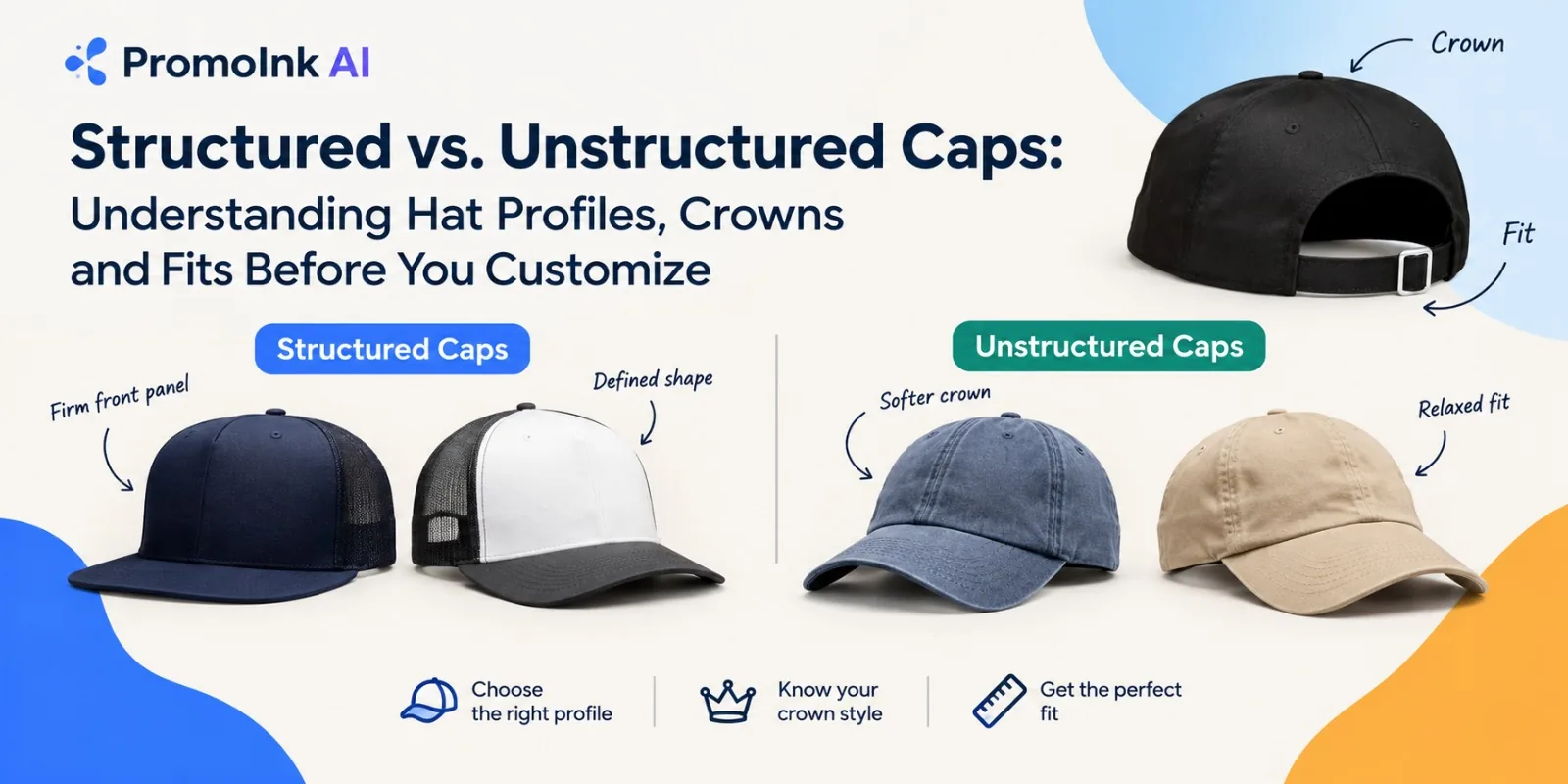
The difference between structured and unstructured hats comes down to how the front of the cap is built and how it holds its shape. Structured caps have reinforced front panels that help the crown maintain a defined shape, while unstructured caps use little or no rigid front reinforcement, allowing the crown to conform more naturally to the wearer's head. The right choice depends on the look, fit, decoration method, and purpose of your custom headwear. PromoInk AI helps buyers compare cap construction, profiles, and styles before selecting blanks for teams, events, businesses, and branded merchandise.
What Makes a Cap Structured or Unstructured?
The simplest way to understand cap construction is to look at the front crown. A structured cap has a stiff backing, such as buckram or a fusible stabilizer, between the outer fabric and the lining. This reinforcement helps the crown maintain its shape even when the cap is not being worn.
An unstructured cap does not have the same rigid reinforcement. Its front panels are softer and more flexible, allowing the fabric to conform more closely to the wearer's head.
Neither construction is automatically better. They create different visual effects and fit characteristics, which makes the choice more about the intended use than a universal quality ranking.
Structured Caps Typically Offer:
- A defined front crown
- A more upright appearance
- Better shape retention
- A traditional athletic or promotional look
- A firm surface that can work well with certain decoration methods
For buyers comparing custom headwear, structured hats are a practical starting point when a firm crown and defined front panel match the desired look. Review the available styles before selecting a blank for team apparel, company merchandise, or event branding.
Unstructured Caps Typically Offer:
- A softer crown
- A relaxed appearance
- More natural conformity to the head
- A casual, worn-in feel
- Flexible front panels with less built-in stiffness
For a softer, more relaxed style, unstructured hats can be a suitable choice for casual brand merchandise, lifestyle collections, event giveaways, and everyday promotional wear. Comparing the available unstructured styles can help you choose a blank that matches your preferred fit and overall appearance.
Hat Crown Profiles Explained
The crown is the portion of the cap that covers the head. Its height and shape determine much of the cap's overall profile.
Hat profile describes the overall crown silhouette, including how closely the cap sits to the head and how tall the crown appears. Caps are commonly described as low profile, mid profile, or high profile.
Low-Profile Caps
Low-profile caps have a shorter crown that sits closer to the head. They generally create a compact, understated appearance.
They can work well for:
- Casual lifestyle branding
- Minimal logo designs
- Dad hats
- Relaxed team merchandise
- Everyday promotional wear
Mid-Profile Caps
Mid-profile caps sit between low and high profiles. They provide more crown height without creating the pronounced shape associated with some high-profile designs.
They are useful for buyers who want a versatile shape that works across business, team, outdoor, and event applications.
High-Profile Caps
High-profile caps have a taller crown and more vertical structure. They can create a bold appearance and provide a larger front area for certain logos or artwork.
They are often associated with:
- Trucker caps
- Performance and athletic headwear
- Structured promotional caps
- Large front-panel logos
- Team merchandise
Structured vs. Unstructured Hats: What Changes for Buyers?
The practical difference becomes clearer when you compare the features that matter during product selection.
The practical difference between structured and unstructured caps becomes clearer when comparing their construction, appearance, and intended use. Structured caps have reinforced crowns that hold a defined shape, creating a crisp, traditional look. They often feature mid- or high-profile crowns, a firm feel, and a well-defined front panel that gives logos a prominent appearance. They are commonly used by teams, businesses, and event organizers. Their shape retention is generally higher.
Unstructured caps, on the other hand, have soft, flexible crowns that follow the shape of the head more closely. They offer a relaxed, casual appearance and often feature low- or mid-profile crowns, although profiles vary by design. Their softer front panels create a less rigid presentation for logos, making them popular with lifestyle brands and casual merchandise programs. They generally feel softer and retain their shape less than structured caps.
The table is a starting point rather than a rulebook. Individual cap models can vary considerably, so product specifications should be checked before placing a bulk order.
Crown Height and Structure Should Be Chosen Together
A common buying mistake is selecting a cap based only on the words "structured" or "unstructured." Crown profile deserves equal attention.
A structured high-profile cap can create a prominent, upright appearance. A structured low-profile cap can retain shape while sitting closer to the head. An unstructured low-profile cap can produce a distinctly relaxed look, while an unstructured mid-profile style can provide a little more room without becoming rigid.
Think of the decision as two separate questions:
1. How firm should the crown be?
2. How tall should the crown be?
Answering both gives you a much clearer idea of the blank you need.
High vs. Low-Profile Caps for Custom Branding
The choice between high- and low-profile caps often comes down to visual presence and intended audience.
A high-profile cap provides a taller front area and can make a logo feel more prominent. This can be useful for sports teams, workwear, outdoor organizations, and brands that want a stronger headwear presence.
A low-profile cap has a closer-fitting appearance and often works well for casual branding. It can suit lifestyle merchandise, small business apparel collections, and event giveaways where a relaxed aesthetic is preferred.
Consider the artwork too. A tall, detailed logo may have a different visual effect on a high-profile structured cap than on a low-profile unstructured cap.
Dad Hat vs. Baseball Cap: What Is the Difference?
The dad hat vs. baseball cap difference is not always as straightforward as buyers expect because "baseball cap" describes a broad category, while "dad hat" usually refers to a particular relaxed style.
A traditional baseball cap can have a structured crown, a curved or flat visor, and different closure options. Its construction varies by model.
A dad hat is generally recognized by its soft, unstructured crown, curved brim, and relaxed appearance. Many dad hats also use an adjustable strap with a buckle or similar closure.
Here is a practical comparison:
A dad hat usually has an unstructured crown, a relaxed fit, and a curved brim, giving it a soft, casual appearance. It is commonly used for lifestyle branding and casual merchandise, with embroidery and patches as popular decoration options.
A traditional baseball cap may have a structured or unstructured crown, and its fit varies by model. Its brim can be curved or flat, and its appearance can range from athletic and casual to professional. Common decoration options include embroidery, patches, and printed designs. These caps are frequently used by sports teams, businesses, and event organizers.
Match the Cap Construction to the Project
Your intended use can narrow the choices quickly.
Structured caps can provide a traditional teamwear appearance, especially when paired with a prominent front logo. Adjustable closures can also make distribution easier when team members need different fits.
A structured mid-profile cap can provide a polished branded appearance. A simple logo placed on the front panel often works well for conferences, company events, and employee merchandise.
Unstructured caps, particularly low-profile styles, can suit brands that want their merchandise to feel less formal. Their softer construction pairs naturally with casual clothing.
Fabric selection, closure, visor construction, and moisture management may matter as much as crown structure. Buyers should consider the conditions in which attendees will wear the caps.
Durability, adjustability, decoration area, and broad fit compatibility should guide the selection. A cap that looks good in a product image still needs to be practical for a varied group of recipients.
Decoration Matters Too
Cap construction can influence how artwork looks after decoration.
Embroidery is one of the most common choices for custom caps because it adds texture and creates a durable branded appearance. Structured front panels can provide a firm base for embroidered designs, although embroidery suitability depends on the specific cap and design.
Unstructured caps can also be embroidered, but their softer crown may require additional backing or stabilization during production. The center seam, front-panel construction, fabric thickness, and logo placement can also affect how cleanly a design stitches.
For embroidery, buyers should confirm:
- Maximum decoration width and height
- Whether the design crosses a center seam
- Minimum text size and line thickness
- Stitch-count limitations
- Whether additional backing or stabilization is required
- Whether 3D/puff embroidery is available for the selected style
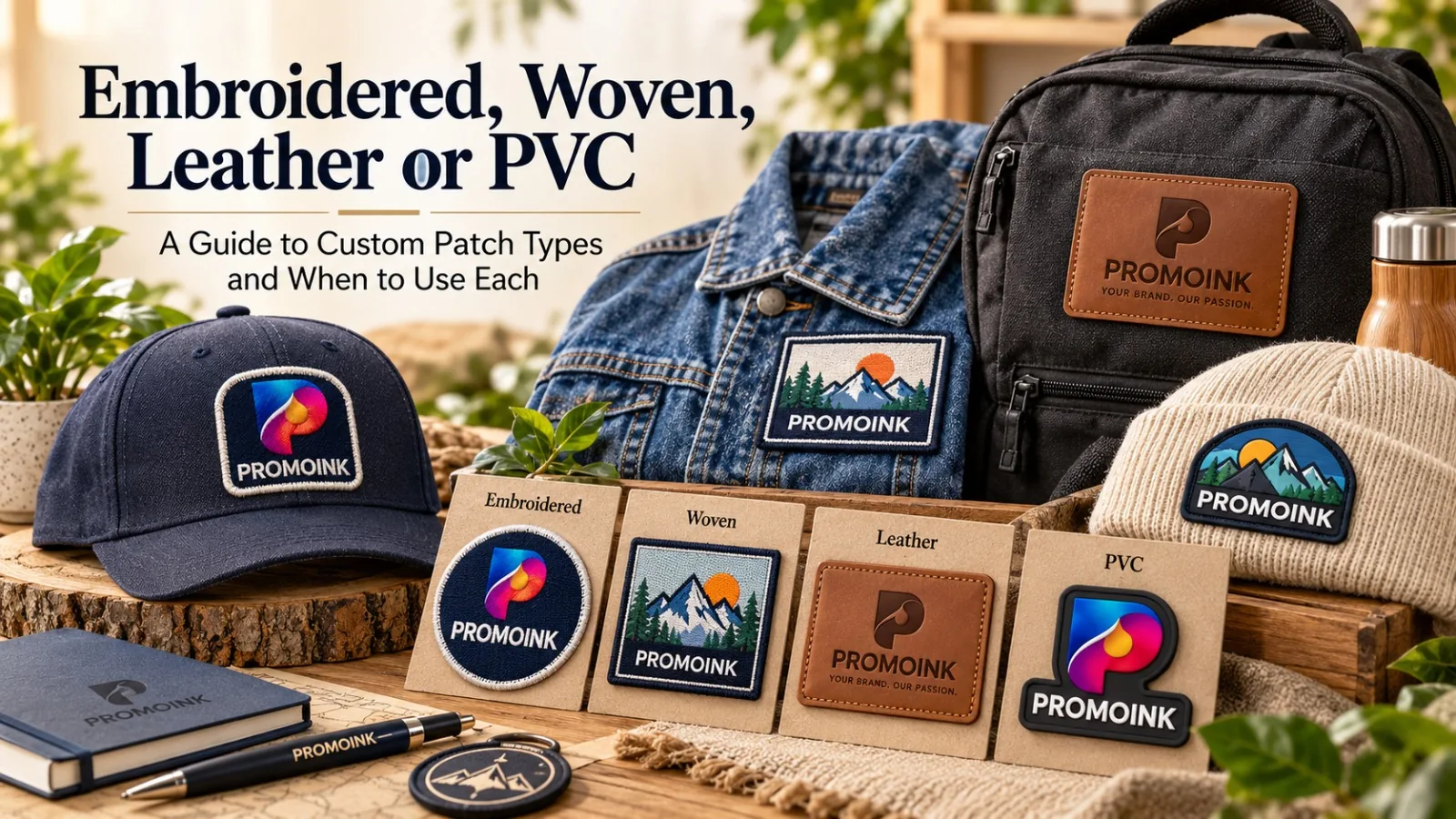
Patches offer another option. Custom patch types, including embroidered, woven, leather, and PVC patches, can create different visual effects without relying entirely on direct embroidery.
For detailed artwork, review the decoration area before ordering. Very small text, thin lines, and intricate graphics may need adjustments to remain legible at cap size.
A good artwork file also matters. Logo dimensions, thread colors, placement, and decoration limitations should be confirmed before production.
Five Questions to Ask Before Ordering Custom Caps
A short checklist can prevent many common ordering mistakes.
Decide between a firm structured front and a softer unstructured crown.
Choose low, mid, or high profile based on the desired appearance and fit.
Confirm that the chosen blank supports embroidery, patches, printing, or another decoration method.
Snapback, hook-and-loop, buckle, and fitted designs offer different adjustment options.
Team uniforms, corporate events, retail merchandise, and casual giveaways can call for very different cap specifications.
Common Cap Selection Mistakes
A few small oversights can affect the finished order.
Choosing by appearance alone: Product photos do not always communicate crown stiffness, profile, or fit accurately.
Ignoring the logo dimensions: A design that looks balanced on a shirt may need adjustment for a smaller cap decoration area.
Confusing profile with structure: High profile does not automatically mean structured, and low profile does not automatically mean unstructured.
Overlooking the closure: An attractive cap may not provide the adjustment range needed for the intended audience.
Skipping a sample or proof review: For large orders, ask whether a physical sample is available for the style, and always review the proof for color, placement and size before production.
How to Choose the Right Blank
Start with the wearer rather than the logo.
For a relaxed everyday product, consider an unstructured low-profile cap. For a more defined branded appearance, a structured mid-profile style may be appropriate. For sports, outdoor, or bold promotional applications, a structured high-profile cap or trucker style may offer the visual presence you want.
Then evaluate fabric, color, closure, decoration method, and order quantity. The right blank should support the complete design rather than only one feature.
A useful selection sequence is:
Purpose → Profile → Structure → Fabric → Closure → Decoration → Proof approval (and a sample, when available)
That order keeps the buying process practical and reduces the chance of choosing a cap that looks right in a catalog but feels wrong for the final application.
Frequently Asked Questions
Are Structured Hats Better Than Unstructured Hats?
Neither construction is universally better. Structured hats hold a defined crown shape, while unstructured hats provide a softer and more relaxed fit. The appropriate choice depends on the intended style, audience, and use.
What Does Structured Mean on a Hat?
Structured means the front crown contains reinforcement that helps it retain its shape. This creates a firmer, more defined appearance compared with a soft unstructured crown.
Are Dad Hats Structured or Unstructured?
Dad hats are generally unstructured. They commonly feature a soft crown, curved brim, and adjustable back closure, although individual products can differ.
What Is the Difference Between Low-Profile and High-Profile Caps?
Low-profile caps have a shorter crown and sit closer to the head. High-profile caps have a taller crown and create a more prominent shape. Both can come in different construction types.
Can Structured Hats Be Embroidered?
Yes. Structured caps are commonly decorated with embroidery, although the suitability of a particular design depends on the cap, decoration area, artwork size, and production specifications.
What Cap Style Is Best for a Company Logo?
The appropriate style depends on the brand aesthetic and intended audience. Structured caps can provide a defined, traditional branded appearance, while unstructured caps can create a softer casual look. Logo size and decoration method should also be considered.
Choose the Blank Before You Finalize the Design
A custom cap starts with more than a logo and a color. Crown construction, profile, brim shape, fabric, closure, and decoration method all influence how the finished headwear looks and feels. Understanding structured vs. unstructured hats gives buyers a practical starting point, while profile selection helps narrow the choices further.
For a relaxed lifestyle piece, an unstructured low-profile design may fit the brief. A structured mid-profile cap can suit corporate and event branding, while a taller profile can create a stronger visual presence for team or promotional applications. Review the blank specifications, decoration requirements, and intended use before placing a bulk order.
For help selecting the right headwear blank and decoration approach, contact us now and share your project requirements. We can help you compare the details that matter before your custom caps move into production.