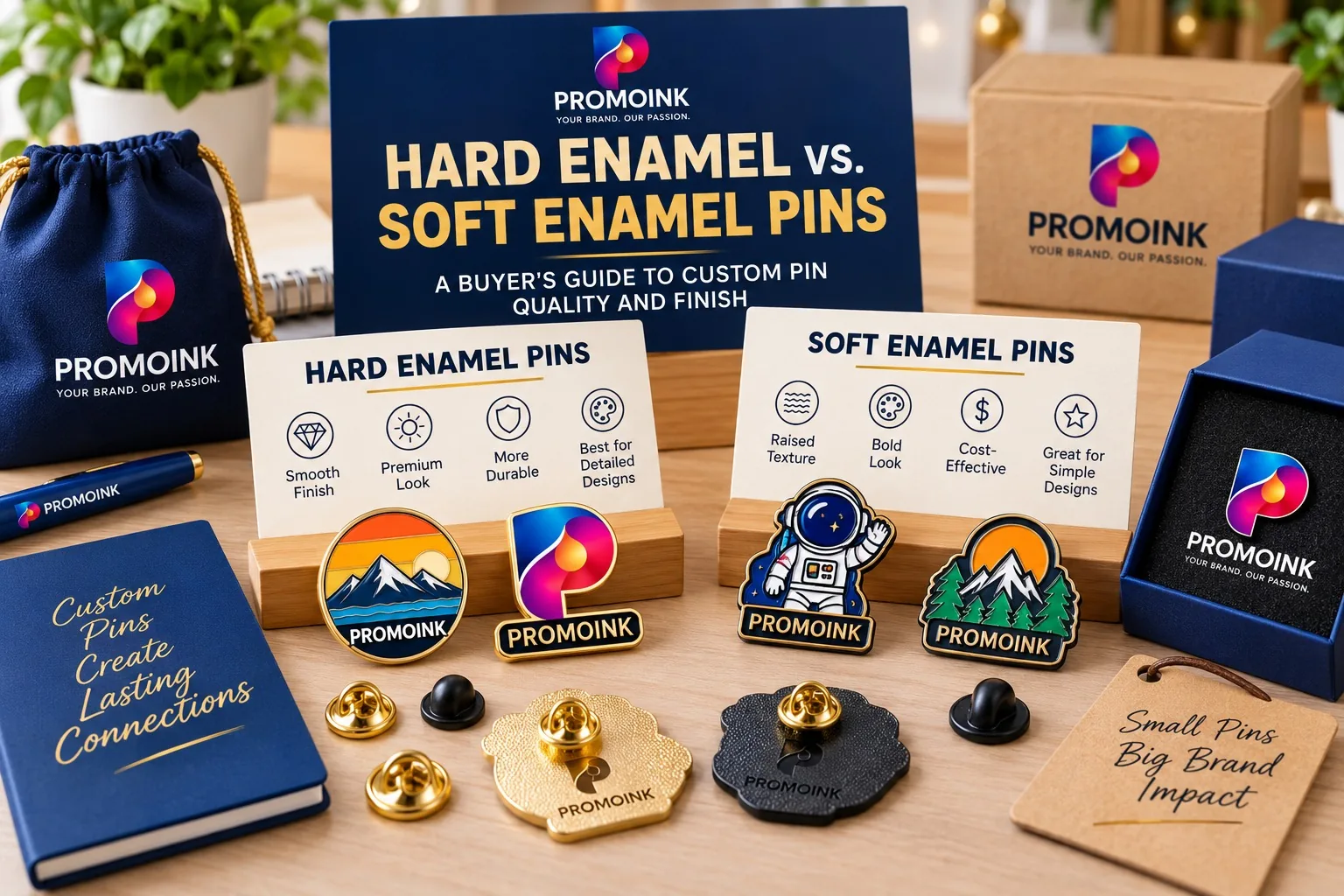
The right choice depends on your logo, artwork, desired finish, budget, and how the pins will be used. For event marketers and merch designers, understanding hard enamel vs soft enamel pins makes it easier to select a finish that supports the design rather than competing with it. PromoInk AI can help buyers evaluate custom pin options based on artwork and intended use.
How Enamel Pins Are Made
Both hard and soft enamel pins begin with a metal base that is shaped into the required outline. The artwork is then translated into recessed sections separated by raised metal borders. Colored enamel is added to those sections before the pin receives its final treatment.
The major difference appears during the finishing stage.
With soft enamel, the enamel is filled into recessed areas but remains slightly below the raised metal borders. You can feel the lines and color sections with your finger, creating the characteristic textured surface.
With hard enamel, the enamel is filled and polished until the surface becomes level with the surrounding metal. The result is smooth to the touch, with a clean and more refined appearance.
The production method affects more than texture. It can change how a logo looks under light, how small details appear, and how the finished pin feels in the hand.
Hard Enamel Pins: Smooth, Clean and Refined
Hard enamel is often selected for logos that need a polished appearance. The level surface creates a consistent finish across the colored sections and metal borders.
How hard enamel is finished
A typical hard enamel production process involves:
- Metal stamping or shaping: The base is formed according to the pin's outline and artwork.
- Color filling: Enamel is placed into the recessed areas.
- Curing: The enamel is hardened as part of the production process.
- Polishing: The surface is polished until the enamel and metal borders sit at approximately the same level.
- Plating: The exposed metal receives the selected finish.
- Attachment: A backing, such as a rubber clutch or locking mechanism, is fitted.
The polishing stage gives hard enamel its smooth surface. Light can move across the face of the pin with fewer visible changes in texture.
Where hard enamel works well
Hard enamel is particularly suitable for:
- Corporate logos with simple shapes
- Brand marks requiring a polished appearance
- Membership or recognition pins
- Premium event merchandise
- Minimalist artwork
- Designs with strong color blocks
- Pins intended for long-term use
Small details still need careful artwork preparation. Extremely fine lines or tiny text can become difficult to reproduce regardless of enamel type.
Soft Enamel Pins: Texture With More Visual Depth
Soft enamel provides a different visual character. The recessed color areas sit below the raised metal lines, creating a tactile surface that is easy to see and feel.
This finish is useful for artwork where contrast between metal outlines and colored sections is part of the visual style.
How soft enamel is finished
The process generally includes:
- Forming the metal base.
- Creating the raised metal borders from the artwork.
- Filling the recessed areas with enamel.
- Curing the enamel.
- Applying the selected plating finish.
- Attaching the pin backing.
Unlike hard enamel, the surface is not polished completely level. The raised metal lines remain clearly defined.
Where soft enamel works well
- Event logos
- Promotional merchandise
- Mascot artwork
- Illustrations
- Designs with multiple outlined sections
- Collectible pins
- Casual or creative brand merchandise
The recessed finish can make individual color areas appear more distinct, especially in artwork that uses strong outlines.
Hard Enamel vs. Soft Enamel Pins Compared
Both finishes can produce durable custom pins, but they create different visual and tactile results.
Surface
- Hard Enamel: Smooth and level.
- Soft Enamel: Features raised metal with recessed color areas.
Texture
- Hard Enamel: Mostly smooth to the touch.
- Soft Enamel: More tactile because of the raised metal edges and recessed enamel.
Appearance
- Hard Enamel: Polished, clean, and refined.
- Soft Enamel: More textured and dimensional.
Color Areas
- Hard Enamel: Creates smooth, even filled sections.
- Soft Enamel: Creates stronger contrast because the colored areas sit below the metal lines.
Artwork Style
- Hard Enamel: Works well for clean logos, simple graphics, and structured designs.
- Soft Enamel: Better suited for illustrations, outlined artwork, and designs with more visible detail.
Perceived Finish
- Hard Enamel: Gives a more formal and premium appearance.
- Soft Enamel: Creates a bolder, more casual, and detailed look.
Cleaning
- Hard Enamel: Easy to wipe because of its smooth surface.
- Soft Enamel: Recessed areas may collect more dust or debris.
Typical Use
- Hard Enamel: Common for corporate pins, recognition awards, branded merchandise, and premium products.
- Soft Enamel: Popular for events, promotions, collectibles, and creative merchandise.
Cost
- Hard Enamel: Often costs more because of the additional finishing process.
- Soft Enamel: Usually a more economical option.
Best Design Approach
- Hard Enamel: Best for clear shapes, clean lines, and controlled detail.
- Soft Enamel: Best for strong outlines, separated color areas, and designs that benefit from visible texture.
Cost varies by supplier, pin size, metal, quantity, plating, number of colors, and production specifications, so finish alone should not be treated as a universal price indicator.
Which Finish Flatters Your Logo?
The artwork itself should guide the decision.
A logo with broad color fields, clean geometry, and a limited color palette can look particularly polished in hard enamel. The smooth face gives the design a controlled appearance and reduces visual interruption caused by surface texture.
A more illustrative logo with bold outlines can benefit from soft enamel. The recessed color creates additional dimension without requiring complex shaping.
Consider these design situations:
Choose hard enamel for:
- Simple corporate marks
- Geometric logos
- Text-based designs with readable lettering
- Formal recognition pins
- Premium-looking brand merchandise
- Designs where a smooth surface is part of the intended appearance
Choose soft enamel for:
- Illustrated logos
- Mascots and characters
- Bold event graphics
- Designs that benefit from visible metal outlines
- Promotional campaigns
- Merchandise intended to feel more expressive
Artwork complexity also matters. Fine details should be reviewed before production because very small elements may need adjustment for reliable reproduction.
Die Struck and Enamel Pins
Die struck and enamel pins is another useful comparison for buyers. Die struck pins use raised and recessed metal to create the design rather than filling sections with colored enamel.
A die struck design can work well for:
- Text
- Monograms
- Simple symbols
- Metallic logos
- Designs where color is unnecessary
Enamel pins provide color inside defined sections, making them more suitable for artwork that relies on multiple color areas.
Some designs can also combine metal detailing with enamel. The choice depends on the artwork and the appearance the finished piece needs to communicate.
Understanding Custom Pin Plating Options
The metal finish changes the appearance of the exposed metal and can affect how the colors are perceived.
Common custom pin plating options include:
- Gold: Creates a warm metallic appearance and can complement formal or celebratory designs.
- Silver: Provides a neutral metallic appearance that works with many color palettes.
- Black nickel: Creates a darker, contemporary look with stronger contrast.
- Copper: Offers a warmer reddish metallic tone.
- Antique finishes: Add a darker effect to recessed metal areas and can emphasize depth.
Plating should be selected alongside the artwork rather than afterward. For example, dark plating can create strong contrast around bright enamel, while a lighter metal finish may produce a cleaner appearance.
The plating also affects how the logo reads under different lighting conditions. Event environments with stage lighting, outdoor displays, or photography can make metallic surfaces appear different from how they look under normal indoor lighting.
How Size and Artwork Affect the Final Result
Pin size is closely connected to design complexity. A large pin provides more physical space for color areas, lettering, and fine details. A small pin requires greater restraint.
- Logo dimensions: Check the smallest elements in the artwork.
- Text size: Small lettering may become difficult to read.
- Color count: More colors can add production complexity.
- Line thickness: Very thin lines may need adjustment.
- Pin shape: Custom outlines can strengthen the connection between the product and the brand.
- Viewing distance: Event giveaways may be seen from a short distance, while staff or membership pins may be viewed closely.
A design that looks clear on a computer screen may not reproduce exactly at a small physical size. A production proof is valuable for catching these issues before manufacturing.
Choosing by Event and Merchandise Use
The intended use can narrow the decision considerably.
Hard enamel can suit conferences, executive events, recognition programs, and branded merchandise where a polished appearance supports the overall presentation.
Soft enamel can work well for event artwork, campaign graphics, mascots, and colorful designs that benefit from visible outlines.
Hard enamel can provide a clean appearance for service awards, achievement pins, and membership identifiers.
Soft enamel is useful for expressive illustrations and character-based designs. Hard enamel can suit collectible designs with cleaner geometry and a polished finish.
For a strict logo application, compare both finishes using the actual artwork. A visual proof can reveal which surface treatment preserves the logo's proportions, colors, and fine details more effectively.
A Practical Buying Checklist
Before approving a custom pin order, review these points:
- Finish: Decide between hard enamel, soft enamel, or a non-enamel metal design.
- Artwork: Confirm that the logo has sufficient line thickness and readable text.
- Size: Select a size that gives the design enough room.
- Metal: Choose a base metal and plating finish that complement the brand colors.
- Backing: Select a suitable attachment based on how the pin will be worn.
- Quantity: Request pricing for the required order volume.
- Proof: Review the production artwork before approval.
- Usage: Consider how frequently the pin will be worn or handled.
- Packaging: Determine if individual packaging or bulk presentation is needed.
- Quality control: Confirm how finished pieces are inspected before shipment.
This checklist helps prevent a common mistake: choosing a finish based only on its appearance in a product catalog.
FAQ About Custom Enamel Pins
Neither finish is universally better. Hard enamel provides a smooth, polished surface, while soft enamel provides a textured appearance with recessed color. The appropriate option depends on the artwork, use case, desired finish, and production requirements.
Hard enamel is polished until the enamel surface is level with the surrounding metal. Soft enamel remains recessed between raised metal borders, giving the finished pin a textured feel.
Both can provide durable merchandise when manufactured correctly. Hard enamel has a smooth surface that can be easier to wipe clean, while soft enamel has recessed areas that create its characteristic texture. Actual durability also depends on materials, plating, production quality, and how the pin is used.
A clean logo with broad shapes and limited detail can work well with hard enamel. A logo with bold outlines or illustrated elements may suit soft enamel. Reviewing the actual artwork at the intended pin size is the most reliable way to decide.
Common types include hard enamel pins, soft enamel pins, die struck pins, printed pins, and specialty designs that combine different techniques. Each method creates a different visual and tactile result.
Pricing depends on several factors, including size, quantity, metal, plating, number of colors, artwork complexity, and production specifications. Hard enamel can cost more in some production setups because of the additional polishing process, but supplier pricing varies.
Make the Finish Part of the Design
Choosing between enamel finishes is not simply a matter of selecting a smooth or textured surface. The production method changes how a logo's lines, colors, shapes, and metallic details appear on the finished product.
Hard enamel suits designs that benefit from a smooth and polished face. Soft enamel can give outlined artwork greater tactile and visual definition. Die struck construction offers another route when the design works better as a metal-only treatment.
For event marketers and merch designers, the most reliable process is to start with the artwork, define the intended use, select the pin size, compare plating options, and review a production proof before approving the order. PromoInk AI can support that process by helping buyers evaluate custom merchandise choices with the finished application in mind.
Need help choosing the right custom pin finish? Contact us today to discuss your artwork, pin style, plating preferences, and order requirements. Our team can help you select a custom pin option that fits your brand and event needs.